
Key Highlights:
- Biggest Red Flag: Never trust screenshots, screen recordings, or PDF tickets. Legit digital tickets use live, rotating barcodes that can’t be copied in a photo.
- Use Protected Payments: Avoid Zelle, Venmo, Cash App, wire transfers, and gift cards. Pay with a credit card or PayPal Goods & Services for buyer protection.
- Verify Ownership: Resale tickets should transfer directly into your personal Ticketmaster, AXS, or SeatGeek account to be considered authentic.
Few experiences are more frustrating than arriving at a concert only to discover your ticket isn’t valid. As ticket scams become increasingly sophisticated, knowing what to look for can save you from losing both money and your chance to attend the show.
The good news? Most fake tickets share the same warning signs. Here are the most common red flags every concertgoer should know.
Only Use Trusted Ticket Marketplaces
The easiest way to avoid scams is to purchase through reputable ticket sellers. If tickets are sold out through the primary ticket provider, consider verified resale marketplaces such as TicketNetwork, Vivid Seats, or StubHub, which offer buyer protection policies and secure ticket transfer systems.
While no platform is perfect, purchasing through established marketplaces is significantly safer than buying directly from strangers on social media.
1. The Seller Sends a Screenshot Instead of a Transfer
A screenshot is one of the most common signs of a fake ticket.
Most major venues now use mobile tickets with rotating or dynamic barcodes that update automatically. A screenshot cannot replicate these security features and may be completely worthless at the gate.
If a seller cannot transfer the ticket directly through an official ticketing platform, proceed with caution.
2. They Only Accept Unprotected Payments
Scammers often push payment methods that offer little or no buyer protection.
If someone refuses credit cards or PayPal Goods & Services and insists on Zelle, Cash App, Venmo Friends & Family, cryptocurrency, or gift cards, treat it as a major warning sign. Once those payments are sent, recovering your money can be extremely difficult.
3. The Transfer Link Looks Suspicious
Legitimate ticket transfers typically happen through official ticketing apps or verified email links.
If a seller sends a link that opens a strange website, requests unnecessary login information, or looks different from the official platform, do not proceed. Many scammers create fake websites designed to steal personal information and payment details.
4. The Price Seems Too Good to Be True
A heavily discounted ticket for a sold-out show should always raise questions.
If comparable seats are selling for hundreds of dollars and someone offers them at a fraction of the market price, there’s usually a reason. Scammers often use unusually low prices to create urgency and encourage buyers to act before thinking.
5. They Pressure You to Buy Immediately
Legitimate sellers are usually willing to answer questions and provide proof of ownership.
Scammers often rely on urgency. They may claim multiple buyers are waiting, say they need payment within minutes, or insist the deal will disappear if you don’t act right away. High-pressure tactics are often used to prevent careful verification.
6. The Website Looks Like a Copy of a Real Ticket Site
Always double-check website URLs before entering payment information.
Fraudsters frequently create lookalike websites that mimic major ticket providers. Small spelling differences, unusual domain extensions, or missing security indicators can reveal a fake site.
When in doubt, visit the ticket provider directly instead of clicking links sent by strangers.
7. They Cannot Provide Proof of Purchase
Most legitimate ticket holders can easily show an original purchase confirmation email or receipt.
If a seller refuses to provide basic proof, sends blurry screenshots, or offers excuses for why they can’t access their order history, consider it a warning sign.
8. Their Social Profile Looks Brand New
When buying from an individual, take a few minutes to review their profile.
Newly created accounts, very few followers, stock-profile photos, and a timeline filled with ticket-selling posts are all common indicators of scam accounts.
9. The Seat Information Doesn’t Match the Venue
Every legitimate ticket should clearly display section, row, and seat information when applicable.
Compare the details with the venue’s seating chart. If the section doesn’t exist or the information seems inconsistent, the ticket may be fake.
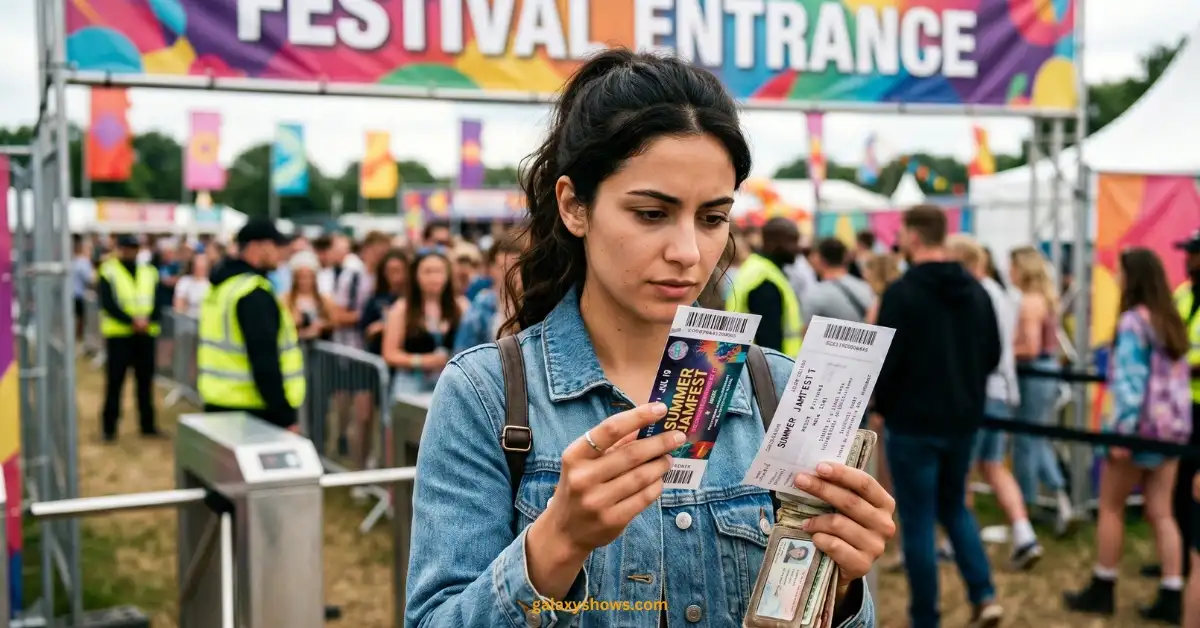
10. The Ticket Design Looks Unprofessional
For events that still use printable tickets, inspect the design carefully.
Misspelled artist names, blurry text, poor formatting, and low-quality graphics can all indicate a counterfeit ticket. Official tickets are typically professionally designed and consistent with venue branding.
11. Unexpected “Transfer Fees” Appear Later
A common scam involves requesting extra money after you’ve already agreed on a price.
The seller may claim they need additional funds for a name-change fee, transfer charge, activation fee, or local tax before releasing the ticket. In most cases, this is simply an attempt to extract more money.
12. Tickets Are Being Sold Before Official Sales Begin
Be skeptical of anyone claiming they already possess tickets before official presales or public sales have started.
In some cases, sellers advertise tickets they don’t actually own and hope to acquire them later. This practice, often called speculative ticketing, carries significant risk for buyers.
Final Tip
When you’re trying to get into a sold-out concert, it’s easy to overlook warning signs because you want the tickets to be real. Don’t ignore your instincts. If a seller seems evasive, pressures you to pay quickly, or refuses an official ticket transfer, walk away.
Missing a concert is disappointing. Losing your money to a scammer is worse.
Frequently Asked Questions
Can Ticketmaster verify a ticket I bought from social media?
Generally, no. Ticketmaster cannot guarantee the authenticity of tickets purchased through private transactions. The safest verification method is receiving the ticket through an official account transfer.
Is a video recording of a ticket proof that it’s real?
No. Videos can be edited, reused, or sent to multiple buyers. A video should never replace an official ticket transfer.
What should I do if I bought a fake ticket?
Contact your payment provider immediately and request a chargeback or fraud investigation. You should also report the seller to the platform where the transaction occurred.
Keep Reading:
- How to Find Cheap Concert Tickets: 15 Proven Ways to Save Money
- What Is Ticketmaster Verified Fan? How to Register & Get Presale Access
- How VIP Tickets Work at Concerts: Benefits, Upgrades & Insider Tips
- Best Time to Buy Concert Tickets for Lower Prices