
Quick Facts
| Information | Details |
|---|---|
| Address | 1000 Vin Scully Ave, Los Angeles, CA 90012 |
| Venue type | Outdoor MLB ballpark / open-air concert venue |
| Baseball capacity | 56,000 |
| Concert capacity | Up to 60,000+, varies by field configuration |
| Opened | 1962 |
| Primary tenant | Los Angeles Dodgers (MLB) |
Overview
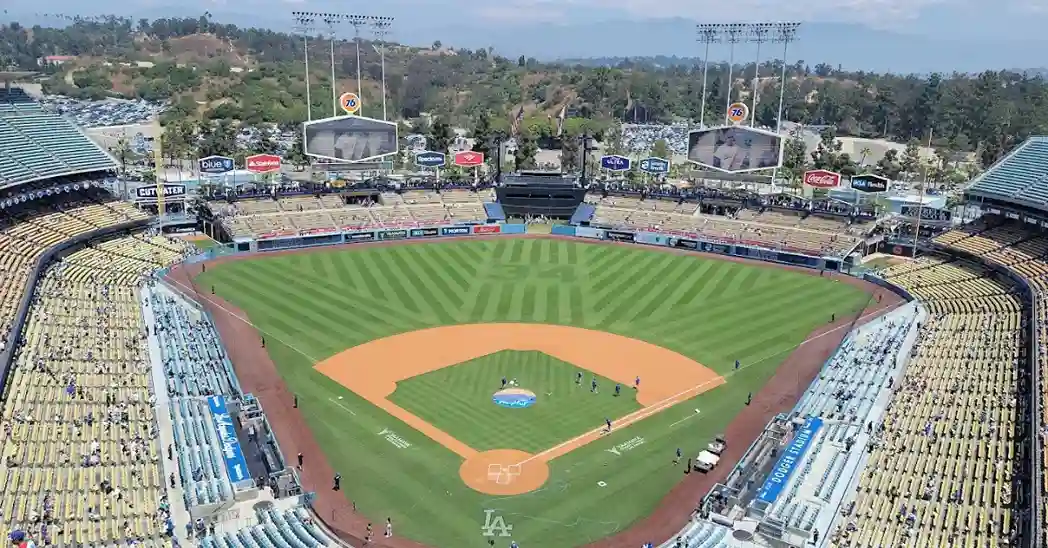
Dodger Stadium opened in 1962 in the Chavez Ravine area of Los Angeles and is the third-oldest active ballpark in MLB, after Fenway Park and Wrigley Field. It’s known for its mid-century modern design, pastel-colored seating decks, and wavy roofs over the outfield pavilions, all set into a hillside with views of downtown LA to the south and the San Gabriel Mountains to the north. A Center Field Plaza, added during a recent renovation, brought food halls, team history displays, and retail into the stadium footprint while keeping the venue’s original 1960s look intact.
Beyond Dodgers baseball, the stadium has hosted historic concerts from Elton John, The Beatles, and Michael Jackson, along with modern touring acts, multi-day festivals like Camp Flog Gnaw, and international soccer matches.
Seating and Layout
Seating splits into field-level space for concerts and several permanent tiers, with section numbers generally running from 1 to 168 around the infield and baselines.
- Field floor/pit: Concert-only sections placed over the field grass, either standing general admission or reserved rows, closest to the stage.
- Field level (100 series): The main lower bowl. Sections along the baselines offer low-elevation sightlines toward an outfield stage.
- Loge level (100/200 series): Sits directly above the Field Level and is widely considered one of the better seating values, close enough for clear sightlines without being too far back.
- Club level: Mid-tier executive suites and premium spaces with indoor and outdoor lounge access.
- Reserve level (1 to 59): Above the Loge level, with broad, wide-angle views of the full stadium.
- Top deck: The highest tier, behind home plate, offering budget-friendly seats with sweeping views of the stage and the LA skyline.
- Left and right field pavilions: Outfield bleacher sections, often closed or positioned behind the stage for end-stage concerts.
For stadium shows, the stage typically goes up in deep center field, facing home plate. Floor seating or standing pits cover the infield and outfield grass, and outfield pavilions behind the stage are usually closed due to obstructed views. Layouts vary by performer, since some tours add extended runways or a secondary B-stage.
Capacity
Standard baseball capacity is 56,000, the largest of any MLB ballpark. For concerts, capacity can exceed 60,000 when field standing room and floor seating are fully used, though the exact figure depends on the show’s specific stage footprint.
Sound and Production
Touring acts bring high-output line-array sound systems and large LED video walls that fill the open-air bowl. Floor and lower bowl sections get direct, punchy audio, while upper decks trade some of that immediacy for a full visual line of sight across the stage and lighting rig.
Accessibility
Wheelchair-accessible and companion seating is available on every level, including the Field, Loge, Reserve, and Top Deck tiers. Accessible elevators and escalators serve all levels and club areas, and accessible entry points and drop-off zones are available at all major plazas. Assistive listening devices, captioning, and sensory bags are available at Guest Services, and service animals are permitted.
Venue Policies
- Bags: Clear plastic, vinyl, or PVC bags up to 12″ x 12″ x 6″, or a small non-clear clutch up to 5″ x 8″ x 2″. Backpacks, coolers, beach bags, and large non-clear bags aren’t allowed. Diaper and medical bags are permitted but subject to search.
- Tickets: Digital entry only, through the official ticketing app.
- Payment: Fully cashless, with cash-to-card kiosks available in the concourses.
- Outside food and drink: Food is allowed if carried in a compliant clear bag; sealed non-alcoholic drinks up to 1 liter are permitted.
- Re-entry: Not permitted once you’ve left.
- Smoking: Prohibited throughout the stadium, including vaping.
Because policies can shift by event, it’s worth checking your ticket or the venue’s site close to showtime.
Getting There
- Dodger Stadium Express: A free LA Metro shuttle runs from Union Station directly to the stadium before and after events, a solid alternative to driving.
- Driving and parking: The stadium is accessible via I-5, CA-110, and US-101. Parking gates typically open about 2.5 hours before events, and pre-purchasing a pass online is recommended.
- Rideshare: Drop-off and pickup zones operate in Lot 11 and along Stadium Way.
- Metro bus: Routes near the perimeter run along Sunset Boulevard and Vin Scully Avenue.
Nearby
Dodger Stadium sits just minutes from Downtown Los Angeles, Chinatown, and Echo Park. Visitors can explore dining along Sunset Boulevard or downtown before heading up the hill to Chavez Ravine.
Before You Arrive
Plan to arrive 75 to 90 minutes before showtime, since traffic into Chavez Ravine tends to build closer to start time. Arriving early gives you room for parking, security, and getting to your seat.
What to bring:
- A fully charged phone with your digital ticket saved to your wallet
- A credit or debit card, or mobile payment, since cash isn’t accepted
- A clear bag under 12″ x 12″ x 6″, or a small clutch under 5″ x 8″ x 2″, if you’re bringing one
- Sunglasses or a hat for day and sunset events, plus a light layer for cooler evening air
Frequently Asked Questions
What is the capacity of Dodger Stadium?
56,000 for baseball, with concert capacity climbing past 60,000 depending on field configuration.
Where is Dodger Stadium located?
1000 Vin Scully Ave, Los Angeles, CA 90012.
Does Dodger Stadium have a clear bag policy?
Yes. Clear plastic, vinyl, or PVC bags up to 12″ x 12″ x 6″ are allowed, along with a small non-clear clutch up to 5″ x 8″ x 2″. Backpacks aren’t permitted.
What is the best way to travel to Dodger Stadium without driving?
The free Dodger Stadium Express shuttle runs from LA Union Station directly to the venue.
Is Dodger Stadium cashless?
Yes, all concessions, retail stores, and vendors require electronic payment.
What are the best seats for a concert at Dodger Stadium?
Loge level or lower reserve sections facing the stage offer a good balance of elevated sightlines and direct sound.
Is Dodger Stadium an indoor or outdoor venue?
It’s an open-air outdoor venue.
Does Dodger Stadium offer ADA-accessible seating?
Yes, wheelchair-accessible and companion seats are available across every seating deck.
More Venues:
- Wrigley Field
- Truist Park
- Camping World Stadium
- Raymond James Stadium
- Nissan Stadium
- Empower Field at Mile High
- Lumen Field
- Acrisure Stadium