
Quick Information
| Information | Details |
|---|---|
| Venue | T-Mobile Park |
| Location | 1250 1st Ave S, Seattle, WA 98134 |
| Venue Type | Retractable-Roof Outdoor Stadium / Ballpark |
| Capacity | ~47,943 for baseball; varies for concerts with field seating |
| Main Events | Stadium Concerts, Major League Baseball, Special Events, Festivals |
| Seating | Field/Floor, Main Level (100s), Terrace Club (200s), View Level (300s), Suites |
Venue Overview
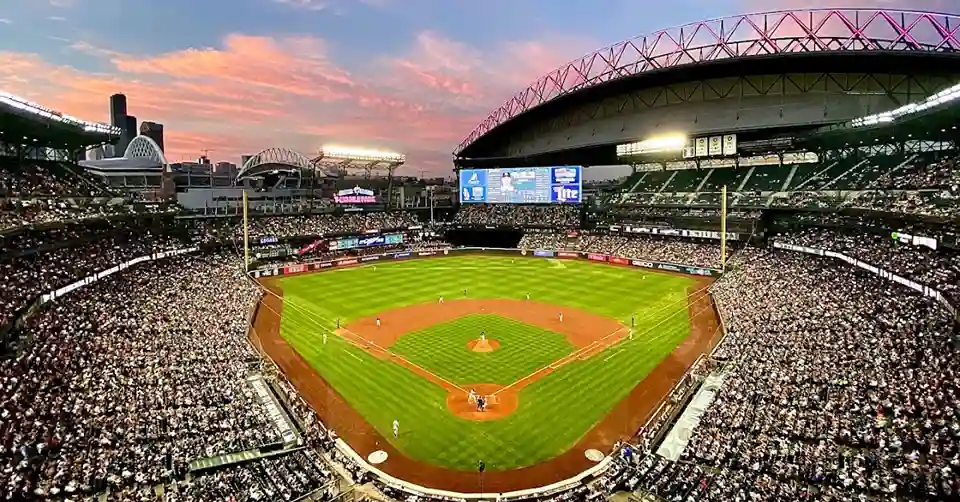
Opened in 1999 as Safeco Field, T-Mobile Park is the home of the Seattle Mariners and one of the Pacific Northwest’s best-known outdoor entertainment venues. Located in Seattle’s SoDo district next to Lumen Field, the stadium combines a traditional open-air ballpark atmosphere with a retractable roof designed for the region’s unpredictable weather.
The stadium’s signature feature is its massive retractable steel roof, which covers the playing field and seating bowl when needed while leaving the sides open. Red brick, exposed steel, wide concourses, and views toward downtown Seattle give T-Mobile Park a distinctive Northwest character.
Concert Experience
Concerts at T-Mobile Park combine the scale of a stadium production with the atmosphere of an outdoor Seattle event.
- Entry & Flow: Gates generally open 90 to 120 minutes before showtime. Multiple entrances help distribute crowds, although lines can become heavier close to the opening act.
- Concourses: Wide concourses provide access to concessions, merchandise, restrooms, and social areas throughout the stadium.
- Sightlines: Field and lower-level seats provide the closest views, while upper levels offer a wider perspective of the stage, lighting, and video production.
- Weather: The retractable roof provides protection from rain while retaining much of the open-air stadium atmosphere. Seattle summer evenings can still become cool, so layers are useful.
Seating & Seat Selection
- Field / Floor: The playing surface can be converted into reserved floor seating or General Admission areas. These tickets offer the closest access to the stage, although floor sightlines can depend on crowd height and seating position.
- Main Level (100 Level): The lower bowl provides elevated views above the field. Sections facing the stage are generally the best choice for balancing proximity and visibility.
- Terrace Club (200 Level): Offers elevated sightlines, premium seating, and access to indoor club areas. It is a strong option for guests prioritizing comfort.
- View Level (300 Level): The upper deck provides broader views of the entire production and is typically more affordable than lower levels.
- Social Areas: Spaces around the outfield provide places to gather, eat, and have drinks, although their concert sightlines can vary significantly depending on stage placement.
Seating Chart & Layout
Concert layouts can differ substantially from the standard baseball configuration:
- Stage Position: Major touring productions generally place the main stage in center field or along the deep outfield wall.
- Field Seating: The playing surface can be converted into reserved floor sections or General Admission areas.
- Closed Sections: Seats directly behind or immediately beside the stage may be removed from the concert inventory because of production equipment and obstructed views.
Always check the event-specific seating map before purchasing tickets because the exact configuration varies by tour.
Capacity
T-Mobile Park has a listed baseball seating capacity of approximately 47,943. Concert capacity varies according to stage size, field configuration, production equipment, and the number of seats made available. Large stadium shows can accommodate tens of thousands of guests, but the exact capacity is event-specific.
Concerts & Events
T-Mobile Park regularly hosts large touring productions in addition to Mariners games. The stadium has welcomed major rock, pop, and country performers and can accommodate large-scale stages, video screens, lighting systems, and field-level production equipment.
The venue has also hosted major sporting and special events, adding to its role as one of Seattle’s largest outdoor event facilities.
Sound & Production
T-Mobile Park is equipped to handle large touring productions:
- Open-Air Acoustics: The partially open design allows sound to disperse naturally rather than creating the enclosed echo associated with domed arenas.
- Retractable Roof: When closed, the roof provides additional protection from weather while maintaining the stadium’s spacious atmosphere.
- Visuals: Large touring LED screens and the stadium’s video board help maintain visibility for guests seated farther from the stage.
Accessibility
T-Mobile Park provides ADA accessibility throughout the facility:
- Accessible Seating: Wheelchair-accessible and companion seating is available across the main seating levels.
- Elevators & Ramps: Elevators and accessible routes connect the major concourses and seating areas.
- Accessible Drop-Off: Accessible drop-off areas are available near the stadium’s main entrances.
- Guest Services: Guest Services can assist with accessibility needs and available assistive services.
Venue Policies
Policies may vary by event, so check the specific concert information before arrival.
- Bag Policy: T-Mobile Park restricts bag sizes and types. Approved clear bags and small clutches are generally permitted within the venue’s size limits.
- Cashless Operations: Concessions, merchandise stands, and bars accept credit cards, debit cards, and mobile payments.
- Outside Food & Drinks: Certain outside food and sealed non-alcoholic beverages may be permitted under current venue rules, subject to event-specific restrictions.
- Mobile Ticketing: Digital tickets are generally required for entry through a mobile device.
Getting to the Venue
T-Mobile Park is particularly convenient to reach by public transportation.
- Link Light Rail: Sound Transit’s 1 Line serves Stadium Station and International District/Chinatown Station, both within walking distance of the stadium.
- Sounder: King Street Station is nearby and provides regional commuter rail service.
- Driving & Parking: Parking garages and private lots operate throughout SoDo. Event-day traffic can be heavy, so advance parking arrangements are recommended.
- Rideshare: Designated pickup and drop-off areas operate around the stadium during major events.
Nearby Area
T-Mobile Park sits between SoDo, Pioneer Square, and the Chinatown-International District. The surrounding area features sports bars, restaurants, breweries, hotels, and other entertainment options. Lumen Field is directly adjacent, while downtown Seattle is a short distance north.
Best Time to Arrive
Plan to arrive 60 to 90 minutes before showtime. This provides time for traffic or transit delays, security screening, concessions, merchandise, and finding your seat.
General Admission floor ticket holders should consider arriving earlier if they want a favorable position near the stage.
What to Bring
- Digital Ticket: Save your mobile ticket to your phone before arriving.
- Payment Method: Credit/debit card or mobile wallet for cashless purchases.
- Photo ID: Required for age-restricted purchases.
- Weather Layers: Bring a light jacket or rain layer for cooler Seattle evenings.
- Approved Bag: Use only a bag that meets the venue’s current size and style requirements.
What Makes T-Mobile Park Special
T-Mobile Park stands out for its combination of open-air stadium atmosphere and retractable-roof protection. The roof allows major concerts to continue through typical Pacific Northwest weather while preserving the spacious feel of an outdoor venue.
Its SoDo location is another advantage. Fans can reach the stadium by light rail, commuter rail, or on foot from nearby Seattle neighborhoods, making it easier to combine a concert with restaurants, nightlife, and other downtown activities.
Frequently Asked Questions
What is the capacity of T-Mobile Park for concerts?
Concert capacity varies by production. The baseball configuration seats approximately 47,943, while concert capacity depends on stage placement and the amount of field space opened to ticket holders.
Where is T-Mobile Park located?
T-Mobile Park is located at 1250 1st Ave S, Seattle, WA 98134, in the SoDo district.
What happens if it rains during a concert at T-Mobile Park?
The retractable roof can be closed to protect the playing field and seating areas from rain, allowing events to continue during poor weather.
What are the best public transportation options to T-Mobile Park?
Sound Transit’s 1 Line provides convenient access through Stadium Station and International District/Chinatown Station. King Street Station is also nearby for Sounder and other rail services.
Is T-Mobile Park a cashless venue?
Yes, the stadium uses cashless payment options for concessions, merchandise, and other purchases.
Can you bring a bag into T-Mobile Park?
Only bags that meet the venue’s current size and style requirements are permitted. Check the event’s latest bag policy before attending.
Are the 200-level Terrace Club seats good for concerts?
Yes. The 200 level provides elevated sightlines and a more comfortable seating experience, making it a strong choice for fans who want a balance of visibility and amenities.
More Venues:
- Coors Field
- Nationals Park
- Progressive Field
- Kauffman Stadium
- Busch Stadium
- Minute Maid Park
- Globe Life Field
- Chase Field