
Quick Facts
| Information | Details |
|---|---|
| Address | 1060 W Addison Street, Chicago, IL 60613 |
| Venue type | Outdoor MLB ballpark / stadium concert venue |
| Baseball capacity | 41,649 (41,949 for day games) |
| Concert capacity | Roughly 40,000 to 45,000+, varies by stage setup |
| Opened | 1914 |
| Primary tenant | Chicago Cubs (MLB) |
Overview
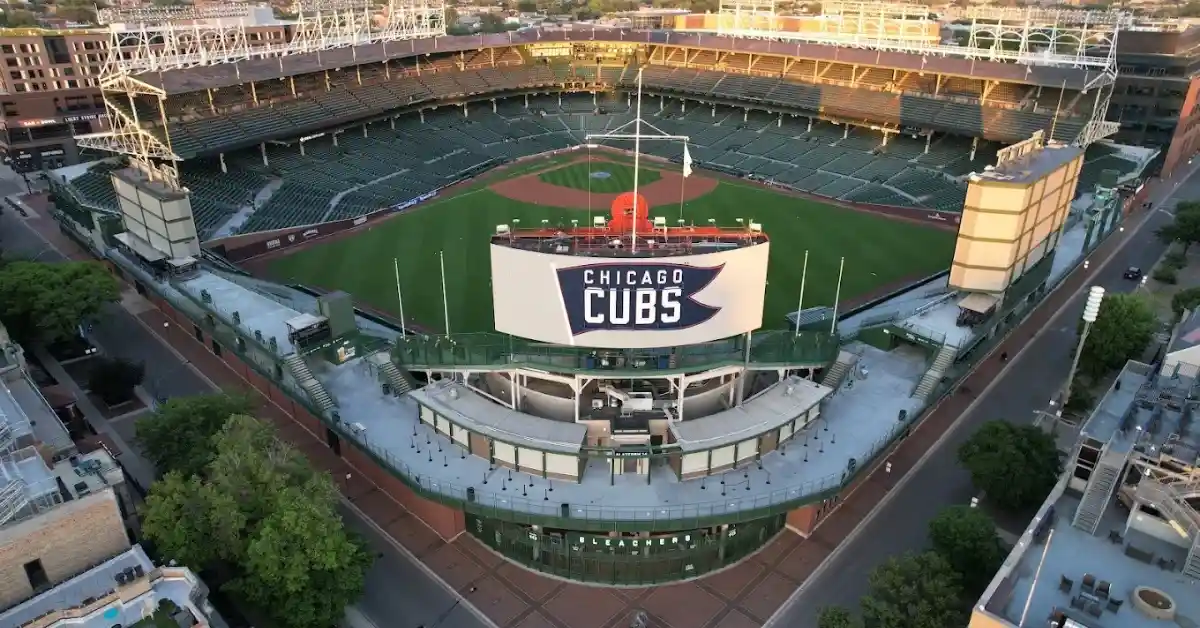
Wrigley Field opened in 1914 as Weeghman Park and has been home to the Chicago Cubs since 1916. It sits in the Lakeview neighborhood on Chicago’s North Side, an area widely known as Wrigleyville, directly embedded in a dense residential and commercial block. The ballpark is known for its green steel framing, hand-operated scoreboard, and ivy-covered outfield walls. A major renovation completed over 2014 to 2019, often called the 1060 Project, expanded concourses, added modern lighting and video screens, and connected the stadium to Gallagher Way, an adjacent public plaza, all without changing the classic bowl and outfield.
Beyond Cubs baseball, Wrigley Field has become a regular summer stop for major touring concerts, with past shows from artists including Elton John, Billy Joel, and Paul McCartney.
Seating and Layout
Seating splits into field-level space for concerts and three permanent tiers.
- Field/pit: Temporary seating or general admission standing space installed over protective turf covering for concerts, closest to the stage.
- Lower level (100s): Circles the lower bowl, with direct sightlines to a stage set up across the infield.
- Terrace level (200s): Sits under the upper deck overhang. Offers an elevated view, though the higher rows (roughly Row 15 and up) can have their sightline partly blocked by support pillars.
- Upper level (300s and 400s): The highest tiers, with wide views of the full production at lower price points.
- Budweiser Bleachers: The historic outfield seating behind center and right field. For concerts, this section often sits beside or behind the stage depending on how it’s oriented, so it’s worth checking the specific event map before buying.
- Club sections: Spaces like the 1914 Club and Catalina Club offer climate-controlled lounges and premium dining.
For most concerts, the stage goes up in deep center field or along the outfield wall, facing home plate. Temporary floor seating or a standing pit covers the infield grass, and the bleacher sections directly behind the stage are typically closed while the rest of the bowl operates as normal tiered seating.
Capacity
The official baseball capacity is 41,649 for night games and 41,949 for day games. The stadium’s all-time attendance record is 47,171, set in 1948. For concerts, capacity depends on how much of the field goes to standing room versus how many bleacher seats are closed off behind the stage, and has been reported anywhere from around 40,000 up to 45,000 or more for shows that add extensive temporary floor seating.
Sound and Production
Wrigley Field relies entirely on touring production equipment, including LED screens and speaker arrays that artists bring in themselves. Sound travels across the open bowl, and on windier nights, higher frequencies can shift somewhat in the upper tiers, though the main floor and lower bowl generally get clear, direct sound.
Accessibility
Wheelchair-accessible seating and companion options are available on all main levels, including the field level, lower bowl, terrace, and upper deck. Elevators connect the main concourses to the suite levels and upper decks. Accessible entry points are located at major gates, including Addison and Clark and the Gallagher Way entrance. Assistive listening devices and service animal accommodations are coordinated through Fan Services locations inside the venue.
Venue Policies
- Bags: Clear bags up to 12″ x 6″ x 12″, or small clutches up to 9″ x 5″. Medical and diaper bags are subject to inspection.
- Tickets: Digital tickets only, through an approved mobile ticketing app.
- Payment: Fully cashless. Concessions, retail, and vendors all take cards or mobile payment.
- Re-entry: Not permitted once your ticket has been scanned.
- Smoking: Prohibited throughout the venue, including vaping.
Because policies can shift by event, it’s worth checking your ticket or the venue’s site close to showtime.
Getting There
- CTA Red Line: The most popular option. Addison station is about half a block from the stadium gates.
- CTA buses: The #152 (Addison) and #22 (Clark) routes both serve the area directly.
- Remote parking: The Cubs run a free shuttle from a remote lot on Rockwell Street, off Irving Park Road, since street parking near the stadium is extremely limited.
- Rideshare: Drop-off and pickup zones are set up several blocks away from the stadium to keep Clark and Addison from gridlocking.
- Bike valet: A free bike valet service runs near the stadium perimeter on event days.
Driving directly to Wrigley Field on event days is best avoided given the limited neighborhood parking and heavy street congestion.
Nearby
Wrigley Field sits in the middle of the Wrigleyville entertainment district. Gallagher Way, an open-air plaza right next to the stadium, has restaurants, breweries, and green space, and the surrounding blocks of Clark and Addison Streets are packed with sports bars, dining, and boutique hotels.
Before You Arrive
Plan to arrive 60 to 90 minutes before showtime to clear security, get through the concourses, and grab food or merchandise before settling in.
What to bring:
- A charged phone with your digital ticket loaded
- A credit or debit card, or contactless payment, since cash isn’t accepted
- A clear bag or small clutch that meets the venue’s size limits, if you’re bringing one
- Weather essentials, like a poncho or layers, since shows happen rain or shine
Frequently Asked Questions
What is the capacity of Wrigley Field?
41,649 for night games (41,949 for day games). Concert capacity varies by stage setup, generally running from around 40,000 to 45,000 or more.
Where is Wrigley Field located?
1060 W Addison Street, in the Lakeview neighborhood on Chicago’s North Side.
What is the best way to travel to Wrigley Field?
The CTA Red Line to Addison station is the fastest and most convenient option.
Is Wrigley Field a cashless venue?
Yes, all concessions, merchandise, and vendors operate on cashless payments only.
What is the bag policy?
Clear bags up to 12″ x 6″ x 12″ and small clutches up to 9″ x 5″ are permitted after screening.
Can I park at the venue?
Official parking near the stadium is very limited. Using the remote lot on Rockwell Street with the free shuttle, or taking public transit, is the better option.
Are there ADA-accessible seats available?
Yes, accessible seating is available across all levels with elevator access.
More Venues:
- Truist Park
- Camping World Stadium
- Raymond James Stadium
- Nissan Stadium
- Empower Field at Mile High
- Lumen Field
- Acrisure Stadium