
Key Highlights:
- Stadiums hold 40,000 to 100,000+ fans and deliver massive spectacle, but you may spend most of the show watching a screen.
- Arenas hold 10,000 to 20,000 fans and hit the sweet spot between big production and real intimacy.
- Theater shows hold under 5,000 people and offer the closest, most personal live experience you can get.
- The right venue depends on what you value most, scale, balanced energy, or up-close connection.
You scored tickets to see your favorite artist. Great. But here’s a question most first-time concertgoers never think to ask: What kind of venue is it?
Two people can see the exact same artist on the exact same tour and walk away with completely different experiences, just based on where the show is held. A stadium show and a theater show aren’t even comparable in terms of what you actually feel standing there. Knowing the difference before you buy can save you money, set the right expectations, and make sure you leave with the night you were hoping for.
Here’s everything broken down, straight and simple.
What Is a Stadium Concert—and Who Is It Actually For?
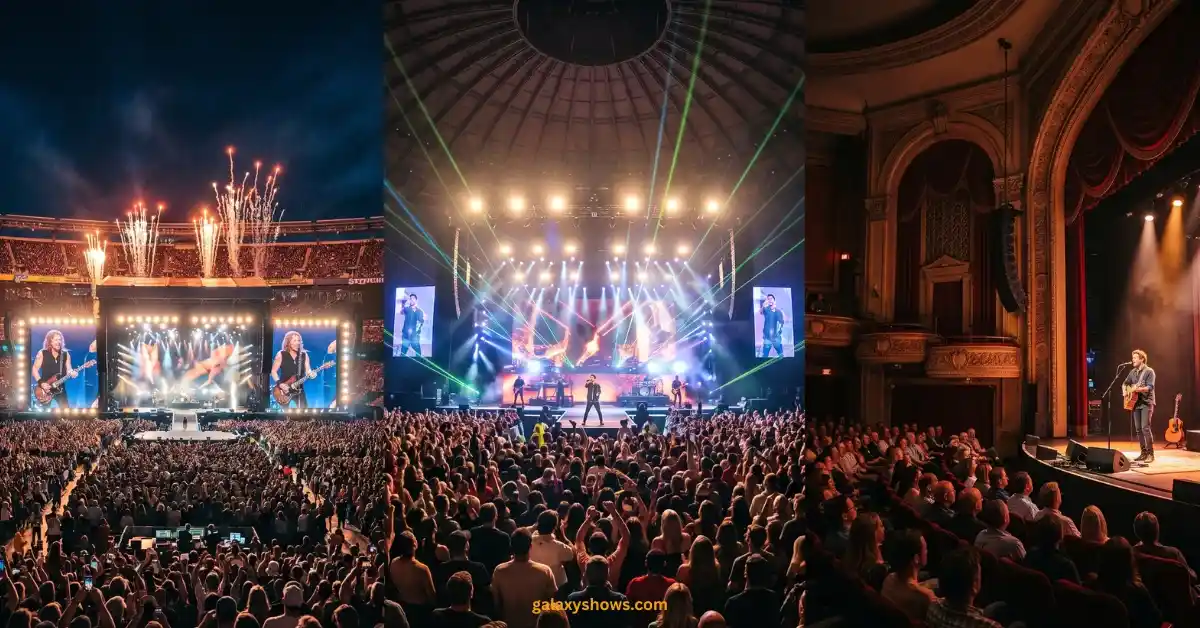
A stadium concert is the largest live music experience you can attend in America. These shows happen in venues built for football, baseball, or soccer, places like SoFi Stadium in Los Angeles, Allegiant Stadium in Las Vegas, MetLife Stadium in New Jersey, and AT&T Stadium in Dallas. Capacity runs from 40,000 to well over 100,000, depending on the configuration.
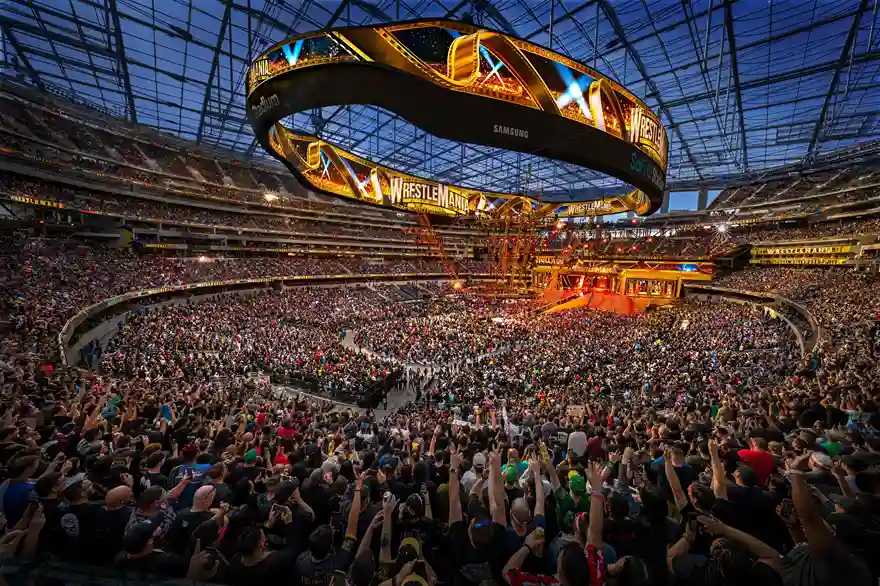
Only the biggest artists on the planet play stadiums. Think Taylor Swift, Beyoncé, Coldplay, Bruno Mars, or a legacy act like the Rolling Stones. To fill a stadium, you need a multigenerational fanbase spanning dozens of markets — and a production budget to match. These shows come with full pyrotechnics, drone light shows, massive LED screens, and stage setups that take entire crews two full days to assemble.
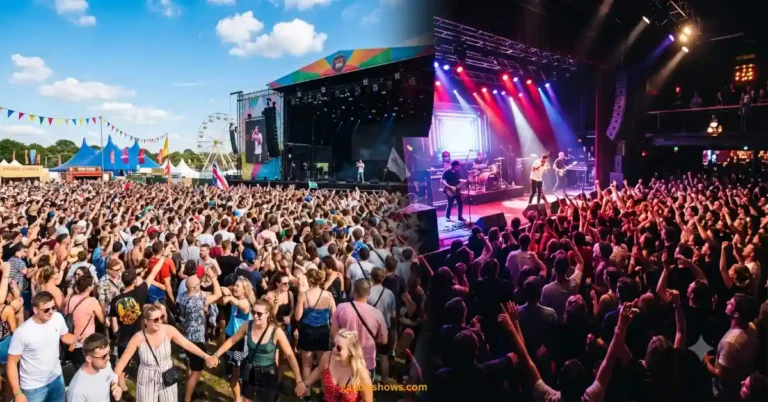
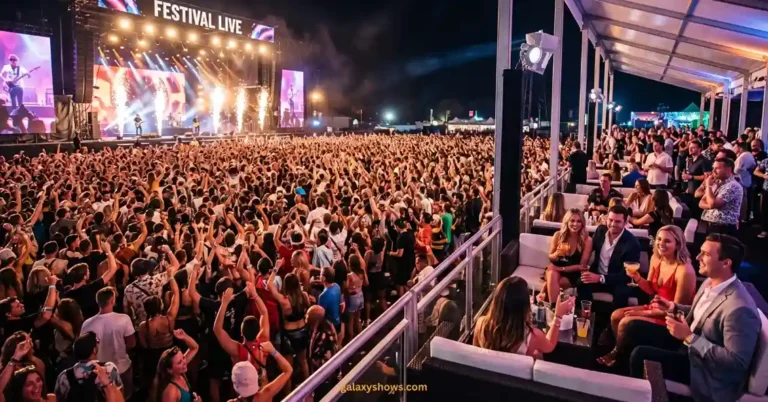
What it actually feels like: Walking into a packed stadium before the show starts is genuinely breathtaking. The scale alone hits you before the first note plays. Being surrounded by 60,000 people all singing the same words at the same moment is one of those rare experiences that feels bigger than just music. It becomes a cultural event, the kind of night people reference for years with “I was there.”
The honest downsides: Unless you’re on the floor or in the lower bowl, you’re watching most of the show on a Jumbotron, the same way you would at home, except you’re also in a crowd and paid premium prices to be there. Sound in open-air stadiums can be inconsistent, and the further back you sit, the more noticeable the delay between what you see and what you hear. Bathroom and concession lines at a 70,000-person event are exactly what you’d expect.
Go to a stadium show if: The artist you love is only touring at this scale right now. Accept what it is, a massive shared event, and you’ll have an unforgettable night.
What Is an Arena Concert — the Sweet Spot of Live Music
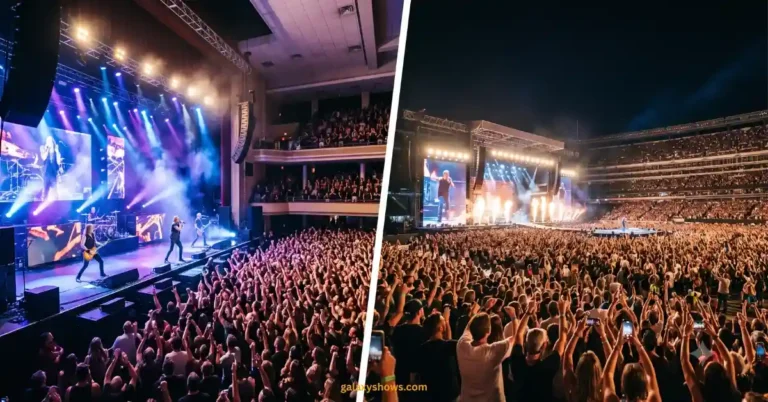
Arena shows are the backbone of the American concert industry and the format most fans say finally makes everything click. Venues like Madison Square Garden (New York), United Center (Chicago), Chase Center (San Francisco), and Kaseya Center (Miami) hold 10,000 to 20,000 fans for concerts. They’re fully indoors, climate-controlled, and built to handle large-scale performances.
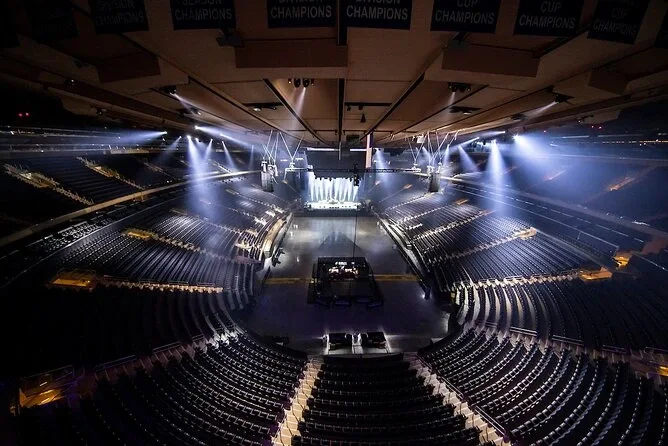
The range of artists who play arenas is huge — pop, hip-hop, rock, country, and everything in between. An arena tour is often where an artist lands just before graduating to stadium level, or where an established act chooses to play when they want a more focused show rather than pure spectacle.
What it actually feels like: Arenas hit the sweet spot that stadiums can’t quite reach. The production is genuinely impressive, with lighting rigs, LED screens, elaborate stage designs, and sometimes runway extensions that push the artist out into the crowd. But because the space is enclosed and more compact, those elements land harder. Lasers look sharper indoors. Sound is more controlled. Even upper-level seats feel connected to the stage in a way that stadium nosebleeds simply don’t.
Artists also tend to perform differently in arenas. The crowd feels tighter and more reactive, and the energy between the stage and the audience moves back and forth in a way that stadium scale tends to dilute. You feel the bass in your chest. You can usually make out the artist’s face without needing a screen.
The honest downsides: Arena tickets for in-demand shows can be expensive, especially with dynamic pricing in play. Parking and post-show exits at a major arena in a busy city can be a genuine headache. And while arenas beat stadiums for sightlines, a seat tucked behind the stage or in a corner can still leave you feeling cut off from the action.
Go to an arena show if: You want serious production quality, a high-energy crowd, and a show that feels both big and genuinely connected. This is the format most fans point to as their best concert experience.
What Is a Theater Show — Where the Real Magic Happens
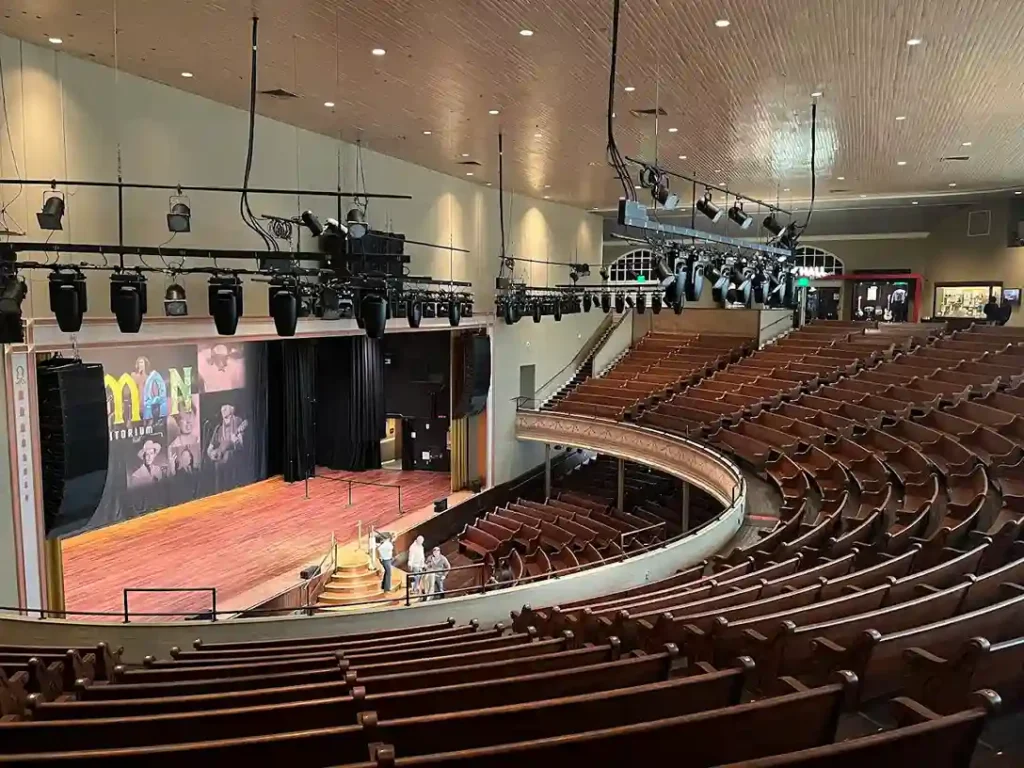
Theater shows are the most overlooked concert format—and skipping them is a real mistake. Theaters, performing arts centers, and mid-size venues typically hold 1,000 to 5,000 people. Think of the Beacon Theatre (New York), the Fillmore (San Francisco), Ryman Auditorium (Nashville), or the Wiltern (Los Angeles).
Artists play in theaters for different reasons. Up-and-coming acts play them because they haven’t yet built an arena-level fanbase. Established artists sometimes choose them deliberately — for an intimate acoustic run, an album release show, or a tour that prioritizes genuine connection over spectacle. Either way, what you experience as a fan is a completely different animal.
What it actually feels like: The word that comes up over and over for theater shows is “intimate.” You’re close to the stage in a way that doesn’t exist at arenas or stadiums. At a 2,000-capacity venue, even a ticket near the back puts you within a real viewing distance of the artist without needing a screen. You can see their expressions. You hear nuances in the music that get swallowed in larger spaces. You feel like you’re watching something happen, not observing an event from far away.
Crowd energy at theater shows is also different — more focused, more die-hard, and more locked into the music itself. These audiences know the deep cuts, not just the singles. Artists feel that and respond to it in ways you rarely see at larger venues.
The honest downsides: Theater tickets for popular artists sell out fast — sometimes in minutes. Standing-room shows can be physically draining over three hours. And production scale is limited—you’re not getting drone shows or 40-foot LED walls at a 2,500-seat venue.
Go to a theater show if: You want to feel genuinely close to the music and the artist, and the performance itself matters more to you than the surrounding spectacle.
Quick Side-by-Side Comparison
| Stadium | Arena | Theater | |
|---|---|---|---|
| Capacity | 40,000–100,000+ | 10,000–20,000 | 1,000–5,000 |
| Ticket price | High to very high | Medium to high | Low to medium |
| Production scale | Massive | Strong | Minimal to moderate |
| Sound quality | Inconsistent | Good | Excellent |
| Artist visibility | Mostly screens | Good | Excellent |
| Crowd energy | Epic, communal | High-voltage | Focused, intense |
| Best for | Once-in-a-lifetime events | Most concert fans | Die-hard fans, music lovers |
Which One Should You Actually Choose?
If the artist you love is only touring at stadium level, go — accept the scale and be part of something massive. If you have a choice between arena and stadium tickets for the same tour, the arena is almost always the better individual experience. And if your favorite artist ever announces a theater run, move fast. Those tickets disappear first, and the show will likely be one of the best live performances you ever see.
The best concert you’ll ever attend might be a 2,500-person theater show for $40 or a 70,000-person stadium night that costs $300. Venue size doesn’t determine how powerful the experience is, but knowing what each type delivers helps you go in with the right mindset and come out with zero regrets.
One last thing: The best seat isn’t always the most expensive one. A center floor spot at an arena show often beats a floor pit at a stadium simply because the scale works in your favor. Study the seating chart before you buy, and choose your section based on what you actually want to feel — not just what looks good on paper.
FAQ
What’s the main difference between a stadium and an arena concert?
Size and setting. Stadiums hold 40,000–100,000+ in large open-air or domed venues; arenas are fully indoor, hold 10,000–20,000, and offer better acoustics and sightlines. Arenas feel more connected; stadiums deliver unmatched scale.
Are theater shows better than arenas or stadiums?
For pure music experience and artist connection, many fans say yes. You’re physically closer, sound is better, and crowds tend to be deeply familiar with the artist’s work. The trade-off is limited production and tickets that sell out fast.
Why do some artists choose arenas over stadiums even when they could sell out both?
To create a more intentional show, maintain tighter production control, and reach fans in more cities rather than concentrating dates in a handful of massive markets.
Is sound quality better at a theater or arena than in a stadium?
Yes, enclosed venues control sound far better than open-air stadiums. Theaters are often designed with acoustics as a priority. Stadiums struggle with delay and echo, especially in sections far from the stage.
How do ticket prices compare across all three?
Theater tickets typically run $30–$150. Arena tickets for major tours range from $80–$300+. Stadium shows for top-tier acts can start around $100 and climb well past $500 for floor and premium sections.
Keep Reading:
- Best Types of Live Entertainment Events in America
- How Concert Tours in the USA Actually Work — From Planning to Show Night
- How to Buy Concert Tickets Safely and Avoid Online Scams