
Key Highlights:
- Major concert tours in the USA are planned 6–12 months out by a team of managers, agents, and promoters.
- Tour routes are built around big “anchor” cities first—then smaller shows fill in the gaps.
- Tickets flow through official platforms like Ticketmaster or AXS, with presales opening before the public sale.
- A full behind-the-scenes crew—sound engineers, truck drivers, and production teams—is already working long before the artist ever walks onstage.
You buy a ticket, show up, and the whole thing looks effortless. But that two-hour set you’re watching? It’s the result of months of planning, dozens of professionals, and thousands of miles of logistics that most fans never see.
Knowing how concert tours in the USA actually work makes you a sharper fan. It explains why tickets drop when they do, why certain cities always get shows, and why your city sometimes gets skipped entirely. Here’s the full picture.
How Concert Tours in the USA Are Planned
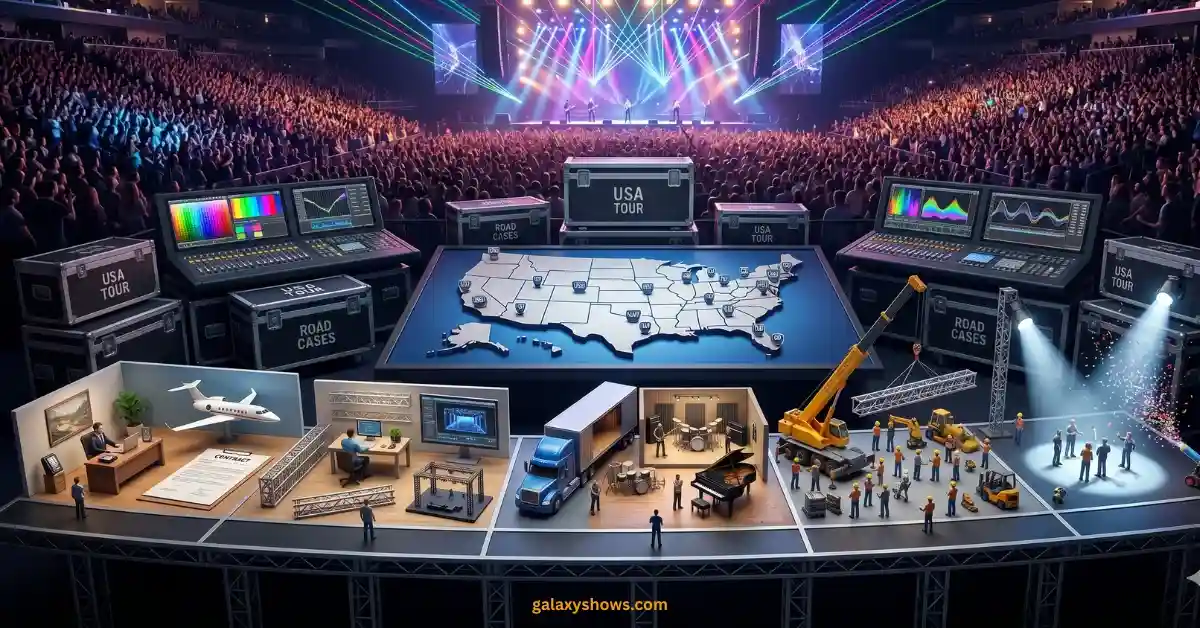
Most major tours start taking shape 6 to 12 months before the first show. It all begins with one question the artist’s management team asks early on: what’s this tour actually for?
Sometimes it’s supporting a new album. Sometimes it’s a career anniversary. Sometimes an artist just wants to get back in front of their fans. That answer drives every decision that follows — how long the tour runs, which cities get dates, and what size venues get booked.
The core planning team typically includes:
- The artist’s manager — holds the big picture together and makes sure the tour fits the artist’s broader career strategy
- A booking agent — the one who reaches out to venues, negotiates, and locks in dates
- A tour promoter — handles local marketing, ticketing partnerships, and on-the-ground logistics in each city
- A tour manager — travels with the artist full-time and runs daily operations on the road
Each role carries real weight. If one piece breaks down, the whole operation feels it.
How Tour Routes Are Decided — and Why Your City Might Get Skipped
Tour routing in the USA is built around anchor dates — the big-market shows in cities like New York, Los Angeles, Chicago, and Nashville. Those get locked in first because they’re the most likely to sell out and drive the most revenue.
Once the anchors are set, the team builds the route around them. If an artist is playing Madison Square Garden on a Friday and has a Chicago show the following Thursday, that’s several open days. The logical move is to look at cities between those two points — Pittsburgh, Cleveland, Columbus — and ask whether a show there makes sense. Those are called routing gigs, and they’re how tours stretch beyond just the biggest markets.
What determines whether your city makes the cut:
- Local ticket sales and streaming data — if fans in your market have been buying this artist’s music, that shows up in the data and makes your city a stronger candidate
- Venue availability — a great city with no open arena on the right date simply gets passed over
- Geographic logic — routing twelve hours out of the way for a single show rarely makes financial sense
- Local promoter relationships — established promoters in certain cities have existing ties with booking agents that can help land a tour date
The Role of Promoters — The People Who Make Each Show Happen
A tour promoter takes financial responsibility for a show in a specific market. They pay the artist a guaranteed fee, handle local advertising, manage ticket sales, and run everything on the ground in that city. Most fans have no idea how much weight this role carries.
There are two main types in the USA:
- National promoters — companies like Live Nation and AEG Presents handle massive arena and stadium tours end to end
- Local promoters — work within a specific city or region, typically booking clubs, theaters, and mid-size venues they know well
When an artist partners with Live Nation, that company often takes over the full tour — booking venues, running ticket sales through Ticketmaster, and managing national marketing. It’s a full-service setup that takes a major logistical load off the artist’s team.
How Concert Tickets Actually Get to Fans
Once venues are booked and dates confirmed, ticketing kicks off in a specific sequence. Here’s how it flows:
- Presale phase — before the general public gets access, presale windows open for fan club members, credit card holders (American Express and Citi are the most common partners), venue members, and Spotify listeners. These windows typically run 24 to 48 hours.
- General on-sale — after presales close, tickets open to everyone. For high-demand shows, the best seats can disappear within minutes.
- Dynamic pricing — many tours now adjust prices in real time based on demand, similar to how airline tickets work. A floor ticket priced at $150 when the sale opens might be $300 an hour later if the show is selling fast.
- Resale market — tickets resold by fans appear on secondary platforms like StubHub or SeatGeek, often well above face value for sold-out shows.
The two main official platforms in the USA are Ticketmaster and AXS. Always check the artist’s official website to confirm which platform is authorized for their tour — that’s your safest first move.
What Happens Behind the Scenes Before Every Concert
A large professional crew arrives at the venue hours — sometimes the full day — before the artist does. What you see as a polished two-hour show is the result of a full day of setup work you never witness.
The crew working behind every major show:
- Production crew — builds the stage, installs rigging, and assembles lighting rigs and video screens
- Sound engineers — tune the audio system to the specific acoustics of that venue
- Lighting designers — program and test the full lighting show for that stage layout
- Truck drivers — haul all equipment between cities, often driving overnight to hit the next stop on time
- Security team — coordinates with local venue staff on crowd flow, entry points, and safety
- Catering team — keeps the artist and entire crew fed through long show days
Load-in for a major arena show can start as early as 6 or 7 in the morning. By the time the artist arrives for afternoon soundcheck, the venue has already been completely transformed.
Why Concerts Get Cancelled or Rescheduled
Cancellations are always frustrating, but they’re rarely arbitrary. Most happen because of something genuinely outside anyone’s control.
Common causes include artist illness, unresolvable production issues before showtime, extreme weather disrupting travel between cities, or a venue emergency. For a tour running 40 or 50 back-to-back dates, the physical and mental toll on an artist and crew is enormous. Sometimes rest isn’t optional.
When a show is cancelled, refunds go back to the original payment method. If it’s rescheduled, your original ticket is almost always valid for the new date. Follow the artist and the venue on social media — cancellation news lands there first, often before the ticketing platform even updates.
One last thing: The fans who get the best seats aren’t the luckiest — they’re the most prepared. Sign up for artist newsletters, follow your local venues on social media, and buy from official sources the moment tickets go on sale. Now that you understand how concert tours in the USA are built, you know exactly what to watch for — and when to move.
FAQ
How far in advance are concert tours planned in the USA?
Most major tours are planned 6–12 months out. Large stadium tours can start even earlier, sometimes over a year ahead, to lock in venues and build national marketing campaigns.
Why do some cities always get shows while others never do?
It comes down to local fan data, venue availability, and geographic routing. Cities with strong streaming numbers, ticket sales history, and established venues make the strongest case. Smaller markets often get skipped when there’s no suitable venue or the route doesn’t fit logistically.
Who actually pays for a concert tour?
It’s shared. The promoter fronts the artist’s guaranteed fee and covers local costs. The artist and label typically fund production, stage design, equipment, and crew. Ticket sales, merch, and sponsorships are then split based on negotiated contracts.
What’s the difference between a booking agent and a tour manager?
A booking agent works from an office, securing dates and deals before the tour starts. A tour manager travels with the artist every day and handles everything on the road, including hotel logistics, schedule management, and keeping each show day on track.
Why do ticket prices rise during a sale?
Most major tours now use dynamic pricing; prices shift automatically based on real-time demand, just like flight tickets. The earlier you buy when the sale opens, the better your odds of paying closer to face value.
Also Read: How to Buy Concert Tickets Safely and Avoid Online Scams