
Key Highlights
- Nearer detail: Compare central front floor sections on the actual concert map.
- Different perspectives: Surrounding tiers trade distance and lateral angle against location and price.
- Premium offers: Judge the audience ticket separately from lounge or parking benefits.
- Access needs: Secure suitable designated inventory before the performance.
At a Glance
| Priority | Start by comparing | Important check |
|---|---|---|
| Direct central stage relationship | Floor 102 and 103 in the full-seating reference | Actual row and event format |
| Central placement farther back | Floor 106–107 or central tier inventory | Distance and ticket disclosures |
| Surrounding perspective | 200- and 300-level sections | Exact angle and route |
| Hospitality amenities | The actual suite or club offer | Audience seat and benefits included |
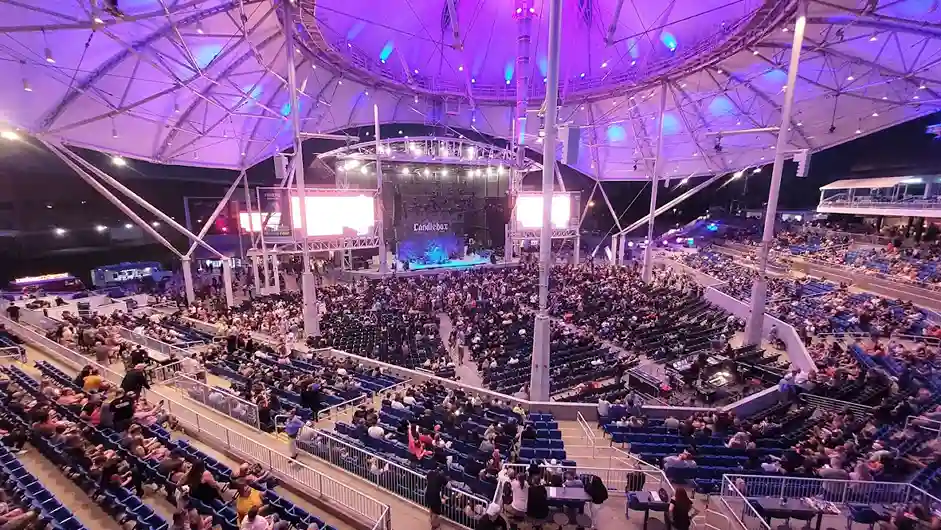
The best seats at Hartford HealthCare Amphitheater depend on proximity, angle, a fixed place and any required accessible features. The Bridgeport venue’s floor and surrounding tiers provide several different perspectives within a covered open-air setting. Compare the actual concert arrangement before buying on a premium label alone.
The published full-seating reference is useful for orientation. Central sections 102 and 103 are nearer the stage, while 106 and 107 sit behind them. Production changes and the actual ticket map still determine the available offer, so the reference should support a purchase rather than replace its terms.
Central Floor for Performer Detail
Start with central front floor inventory if nearer performer detail is the main priority. Read the exact row and seat to understand where the ticket lies within the block. A location near the back of a front section differs from its first available row.
Compare that offer with a more distant central seat and any side alternative. The stage relationship changes across the floor, so there is no useful guarantee that every ticket with a 100-level label has the same perspective. Read any view limitation disclosed for the actual seat.
Surrounding Tiers for Other Perspectives
The 200-level sections curve around the floor, and the 300-level tier lies farther back in the full-seating reference. Their exact position matters: a side block and a central block on one level do not share an identical stage angle.
Central 204 is a useful reference point opposite the stage when reading the standard diagram. Compare its actual available rows with neighboring inventory rather than treating the entire tier as one experience. More distance may suit a broader perspective, while proximity may matter more to someone following a particular performer.
Check Seated Versus General Admission
For reserved tickets, confirm the complete section, row and seat before checkout. Groups wanting a fixed shared location should verify that their actual seats adjoin. A broad section or shared price band does not by itself establish adjacency.
If the performance sells general admission in a front or floor category, read its actual format. An administrative number does not necessarily reserve a chair. Establish whether standing or assigned seating fits the group before comparing the category with a conventional reserved ticket.
Decide What Premium Benefits Add
The venue advertises suites, loge boxes, clubs and a Sky Deck among its hospitality products. Those may add useful services, but their names do not establish the precise audience view. Read the actual location and benefits listed for the offer under consideration.
Compare parking and entrance entitlements separately. VIP Lot A requires the appropriate pass or listing, and premium entrance routes depend on ticket eligibility. A lounge benefit should not be assumed to include every nearby club or vehicle arrangement merely because the package is described as premium.
Accessibility and Comfort Before Price
Purchase suitable designated accessible inventory if space, transfers or companion placement are important. The venue warns that accessible locations can sell out and that day-of-show changes are limited. An ordinary aisle seat should not be treated as a substitute for the specific features required.
Accessible parking is identified across from the venue and on the ground level of the transit garage. Guest assistance is directly inside the Main Entrance. Connect the chosen audience location with a workable arrival route, and prepare the mobile ticket before screening. The better seat is one the attendee can reach and use comfortably throughout the performance.
Frequently Asked Questions
Where should I start for central proximity?
Compare the actual front floor inventory. The full-seating reference places central 102 and 103 nearer the stage than 106 and 107.
Are all surrounding-tier tickets alike?
No. Sections curve around the floor, so the actual angle, row and distance vary.
Does a premium offer guarantee the closest stage view?
No. Check the audience location separately from lounge, service, entrance and parking benefits.
What should groups verify for reserved seating?
That their actual seats adjoin, rather than assuming one section or price band means sitting together.
Should accessible seating be arranged before arrival?
Yes. The venue says such inventory can sell out and warns that day-of-show changes are very limited.
Does the full-seating reference settle every concert arrangement?
No. Check the chosen performance’s actual ticket map and the individual offer’s conditions before purchasing.
Official sources: Venue visitor FAQ · Venue information · Official ticketing and parking details · Published technical seating reference.