
Key Highlights
- Use the correct venue: Replacement-site tickets need their own map and location checks.
- Compare actual positions: Stage distance, lateral angle and row matter more than an inherited section reputation.
- Confirm the format: Front or pit admission may require a seated-versus-standing decision.
- Accessible needs: Establish the required space, companion arrangement and route before price comparisons.
At a Glance
| Priority | Compare on the actual map | Avoid assuming |
|---|---|---|
| Nearer performers | Available front inventory | A remembered old-site section occupies the same position |
| A known place | Assigned seats with complete details | A broad category guarantees adjoining tickets |
| Flexible front admission | The actual pit or GA offer | A processing number means a chair |
| Accessible attendance | Suitable designated inventory | An ordinary aisle supplies every required feature |
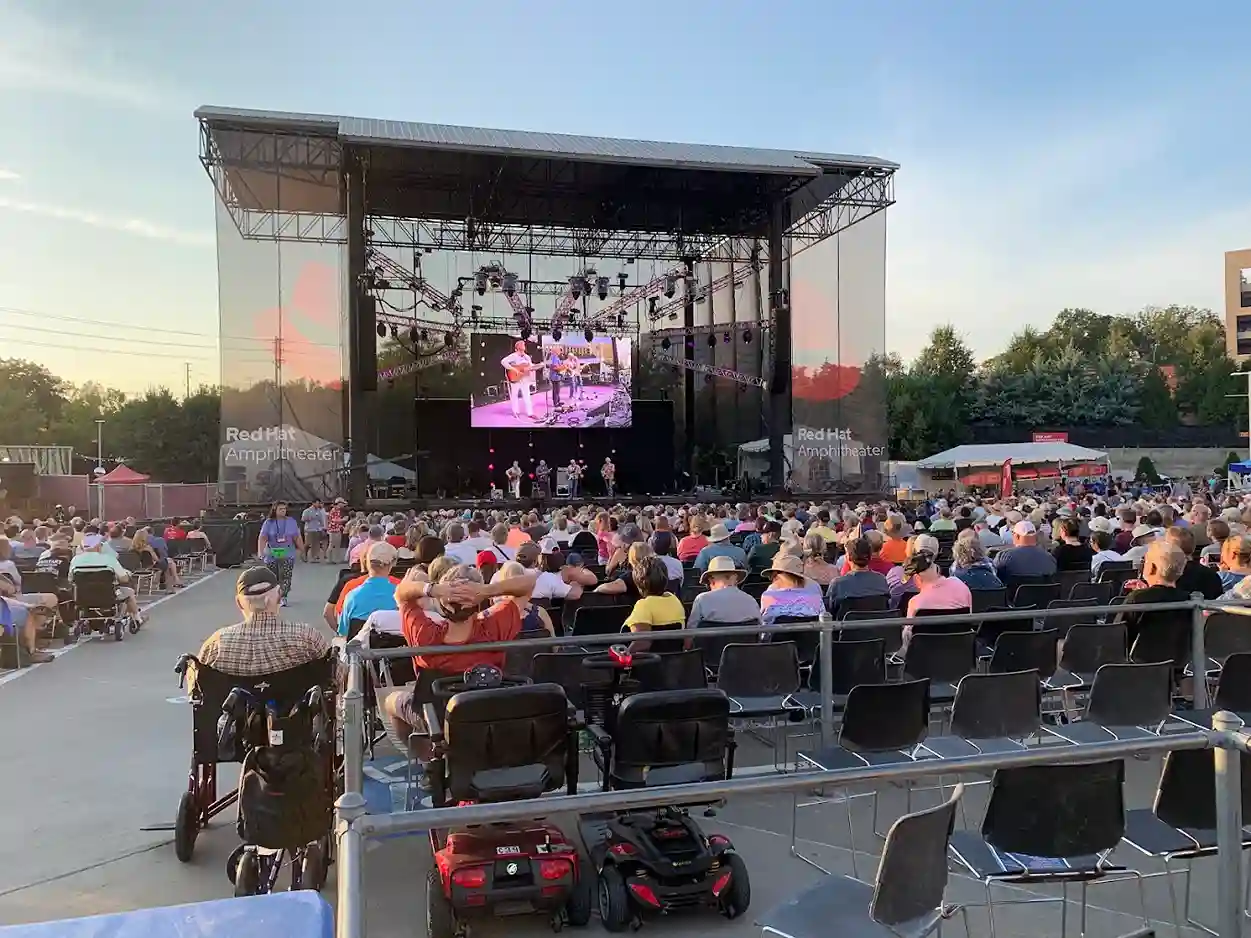
The best seats at Red Hat Amphitheater must be assessed against the site and performance actually being sold. Raleigh is replacing the original venue one block south, with the operator identifying 2027 as the new opening plan. Recommendations based on the former amphitheater’s rows should not be treated as verified advice for the replacement.
Start with the official calendar and actual concert map. The new location, stage arrangement and admission format need to be clear before comparing price. Precise row rankings would be premature without the relevant map and individual ticket information, particularly during a transition between two different audience layouts.
Proximity Needs a Real Map
If nearer performer detail is the priority, compare the front inventory actually offered for the chosen performance. Read the row and position across the stage. A more central location farther back and a closer side ticket can provide different angles, so distance alone is an incomplete comparison.
Do not transfer an old section’s reputation to a reused name or number. The venue’s relocation changes the physical reference. Read any view disclosure on the specific offer rather than assuming that a previous concert photograph establishes the rebuilt site’s sightline.
Assigned Seats for a Fixed Location
Reserved tickets are useful when knowing the destination before arrival matters. Establish the full section, row and seat and verify genuine adjacency for a group. Separate purchases within one broad price category do not necessarily place everyone together.
Keep the actual ticket assignment after purchase instead of relying only on a saved general chart. The official site has published with-pit and no-pit diagrams, demonstrating that even one venue can use different concert arrangements. The performance map should settle the applicable format.
Decide Whether Front GA Fits
If a front or pit category is offered, establish whether it supplies assigned chairs or standing admission. A processing code should not be treated as a physical seat. Resolve this before purchase when standing time, transfers or the ability to remain seated affects attendance.
A general-admission category may suit one visitor’s priorities while being unsuitable for another member of the group. Compare its actual access conditions with available reserved inventory. Compare price and proximity alongside comfort.
Accessible Features Before Section Rankings
The venue’s published accessibility information explains wheelchair space and separately purchased companion seating. Use the authorized sale’s accessible-ticket filter and confirm the actual replacement-site location. An ordinary aisle chair should not be treated as proof of equivalent space or a suitable route.
Request clarification if companion placement, transfer needs or the entrance connection are unclear. Old gate and passenger-loading references may describe the former venue. Establish the new performance’s operating arrangement rather than assuming familiar directions transfer unchanged.
Outdoor Comfort and Arrival
Check the actual ticket and new-site information for exposure and any amenities included. A design image, a project capacity requirement or a general premium name does not establish shelter at an individual seat. Read the actual offer before making comfort assumptions central to the purchase.
The downtown location also calls for a workable garage and pedestrian plan. Construction can affect streets and access routes, including the South Street closure associated with the selected concept. Save the event’s arrival instructions and allow time for the walk and screening. A better Red Hat choice combines a verified audience location with the ability to reach and use it comfortably.
Frequently Asked Questions
Can old Red Hat seat rankings be used unchanged for the replacement?
No. The venue is relocating, so compare the actual new-site map and ticket details rather than transferring old row recommendations.
What should I compare for nearer performer detail?
The actual front inventory, precise row and lateral position offered for the chosen performance.
Does a pit offer automatically provide a chair?
No assumption should be made. Read the actual assigned or standing-admission conditions.
What should a reserved-seat group verify?
Complete assignments and genuine adjacency, rather than relying only on a broad section or price category.
How should accessibility affect the purchase?
Prioritize suitable designated features, companion placement and the replacement-site arrival route before comparing ordinary seats by price.
Does a project rendering establish an individual seat’s shelter or view?
No. Use the actual performance map, ticket disclosures and operating venue information for those details.
Official sources: Official relocation information · City closure and construction update · Seating references · Directions and parking · Accessibility · Selected relocation concept.